All articles
The Difference Between Lice and Dandruff How to Identify the Problem
Learn how to identify lice vs dandruff, spot key symptoms, and understand the differences to choose the right treatment for each scalp problem.
Finding white particles in itchy hair can be worrying. Are they flakes or lice eggs? If you are asking, “how can I tell the difference between dandruff and lice?”, start by looking at how firmly the particles are attached and whether anything is moving. Because dandruff and nits look similar, people may apply anti-dandruff shampoo to an active infestation or use a lice product when the problem is dry skin.
Understanding the difference between lice and dandruff helps you choose the right action. If you cannot identify what you see, Zero Lice UAE provides at-home lice checks and removal in Dubai, Sharjah, Ajman, and other areas of the UAE.
What Are Head Lice?
Head lice are tiny insects that live near the scalp. They crawl but cannot fly or jump and spread mainly through head-to-head contact. Infestations are common among children and may spread to their families.
Female lice attach eggs, or nits, firmly to hair shafts. A moving louse is the clearest confirmation of active infestation. Eggs alone need inspection because some may be empty or from a previous infestation.
What Is Dandruff?
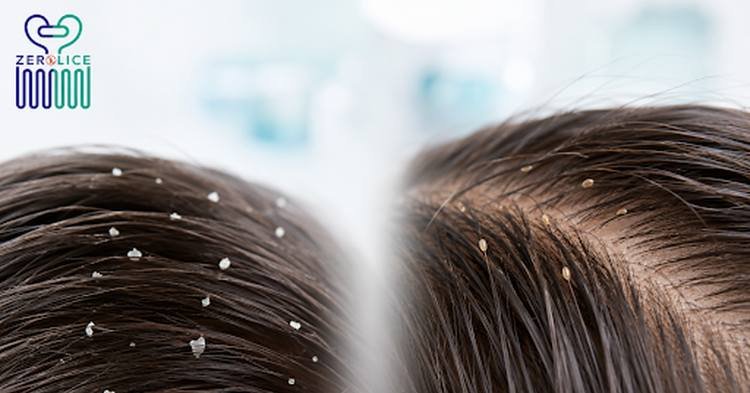
Dandruff consists of white or grey skin flakes that may fall onto the shoulders. It can cause itching but is not contagious. It may be associated with dry skin, seborrhoeic dermatitis, or sensitivity to products.
Dandruff moves when touched, unlike a nit fixed to the hair. Its treatment differs from professional lice removal process, so confirm the cause first.
Lice Nits vs Dandruff: The Main Differences
- Appearance: Nits are tiny oval eggs, while dandruff appears as loose skin flakes.
- Colour: Nits may be pale, yellow, or brown; dandruff is usually white or grey.
- Attachment: Nits stick firmly to the hair shaft, while dandruff falls away easily.
- Location: Nits are often near the roots, especially behind the ears and at the nape.
- Movement: Live lice crawl through the hair; dandruff does not move.
- Contagiousness: Lice are contagious, while dandruff is not.
- Treatment: Lice require lice treatment and nit removal; dandruff is usually managed with anti-dandruff products.
What Do Lice Eggs Look Like Compared With Dandruff?
Lice eggs are tiny, oval objects attached to the side of a hair. They are often found close to the scalp. A nit usually remains fixed when touched and may require a fine-toothed comb for removal.
Dandruff flakes vary in shape, move easily, and may fall onto clothing. Product residue, dead skin, lint, and hair casts can also resemble nits, so colour alone cannot diagnose lice.
Does Itching Mean Lice or Dandruff?
Both conditions can itch. With lice, itching may be stronger behind the ears or around the nape. Some people also experience a crawling sensation, disturbed sleep, or scratches.
Dandruff itching is linked to dryness, flaking, or inflammation. Loose flakes appear without moving lice or attached eggs. Itching alone cannot confirm either condition; a live louse is the clearest evidence.
How to Check the Hair Properly at Home
Use bright lighting and a fine-toothed detection comb, then follow these steps:
- Wet the hair and apply conditioner to make combing easier.
- Divide the hair into small, organised sections.
- Comb from the scalp to the ends, not only across the surface.
- Wipe the comb on a white tissue after every section and look for moving lice.
- Pay particular attention to the areas behind the ears and around the nape.
- If you find live lice, check close contacts to reduce the risk of reinfestation.
Thick, long, or curly hair may be difficult to inspect. Contact the Zero Lice team for an at-home check instead of using an unnecessary product.
Treating Lice Is Different From Treating Dandruff
Dandruff treatment aims to reduce flaking and its underlying cause, often with a suitable shampoo. If it persists or the scalp becomes red, painful, or swollen, consult a dermatologist.
Lice treatment must target crawling insects and eggs, followed by repeat inspection. Ordinary shampoo is insufficient, and unproven remedies may irritate the scalp. Review why DIY lice treatments fail before trying another remedy.
Zero Lice offers at-home inspection, specialised lice and nit removal, a final check, and follow-up. Explore professional treatment devices and lice removal prices and packages before booking.
When Should You Request a Professional Check?
Request help when you cannot identify attached particles, find moving lice, experience repeated infestations, or cannot check a child thoroughly. An expert can distinguish dandruff from lice eggs before treatment.
If your child is affected, read what to do when a child has lice, then book an at-home removal service.
Confirm the Problem Before Starting Treatment
Recognising the difference between lice and dandruff is the first step to correct treatment. Dandruff moves and is not contagious; lice eggs remain attached and may appear with live insects.
If you are unsure, avoid harsh products. Book an at-home check with Zero Lice UAE for specialised lice and nit removal with clear follow-up guidance.
Frequently Asked Questions
How Can I Tell the Difference Between Dandruff and Lice?
Dandruff flakes move or fall easily. Lice eggs are tiny, oval, and firmly attached to a hair, often near the roots. When comparing lice nits vs dandruff, remember that nits stay fixed while dandruff is usually loose. A crawling louse confirms active infestation.
Can Dandruff Itch Like Lice?
Yes. Both may itch. Lice may also cause a crawling sensation and attached eggs behind the ears, while dandruff appears as loose flakes across the scalp and shoulders.
How Can I Make Sure There Are No Lice in My Hair?
Wet and section the hair, then use a fine-toothed comb from roots to ends under good lighting. If no live lice appear after thorough repeated checks, active infestation is less likely. If unsure, request a professional check.
What Causes Lice in Babies?
Babies usually acquire lice through close contact with an infested parent, sibling, or carer—not poor hygiene. Read about the causes of lice in babies and consult a doctor before applying treatment.