All articles
Symptoms of Lice in Hair How to Detect and Treat an Infestation
Discover the common symptoms of lice in hair, learn how to tell nits from dandruff, and find effective treatment. Book Zero Lice at-home service in the UAE.
The first symptoms of lice in hair can be easy to overlook. A child may scratch more often, feel something moving through their hair, or struggle to sleep. Small white particles may appear near the roots, but not every speck is a lice egg; dandruff and product residue can look similar.
Recognizing the signs early makes the infestation easier to manage and reduces its spread. If you notice persistent itching, attached eggs, or live insects, Zero Lice UAE provides professional at-home lice checks and removal in Dubai, Sharjah, Ajman, and other areas of the UAE.
What Are Head Lice and How Do They Spread?
Head lice are tiny insects that live close to the scalp. They cannot fly or jump; they crawl between people, mainly through direct head-to-head contact. This makes lice particularly common among children who play or study close together.
Lice are not a sign of poor hygiene and can live in clean hair. Ordinary shampoo does not eliminate an active infestation. For a baby or young child, read about the causes of lice in infants before applying any product.
Common Symptoms of Lice in Hair
Symptoms vary, and some people notice little at first. Check the hair carefully when any of these signs appear:
1. Persistent Scalp Itching
Itching is a common sign and is often strongest behind the ears and around the neckline. It does not confirm lice by itself because dandruff, eczema, and dry skin can cause similar irritation.
2. A Crawling or Tickling Sensation
Some people feel movement or tickling on the scalp, especially while resting. The hair must still be inspected to confirm the cause.
3. Live Lice Moving Through the Hair
Finding a live louse is the clearest evidence. Lice are small, fast-moving, and usually greyish or brown. Examine small sections under bright light, especially behind the ears and near the nape.
4. Nits Attached to the Hair Shaft
Nits attach firmly to individual hairs near the scalp and may look pale, yellowish, or brown. Unlike dandruff, they do not brush away easily.
5. Redness, Scratches, or Small Sores
Scratching can cause redness, sores, and occasionally a secondary skin infection. Seek medical advice if the scalp becomes painful, swollen, or produces discharge.
6. Poor Sleep and Irritability
Itching may disturb sleep and make a child restless or irritable. When this appears with scratching or attached particles, arrange a lice check.
How Can You Confirm a Head Lice Infestation?
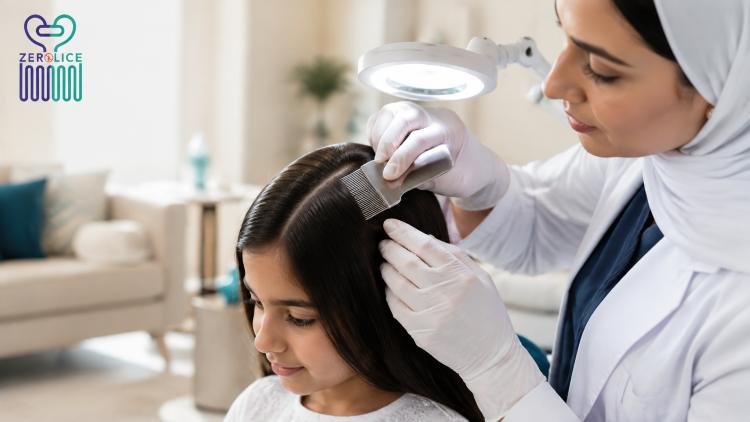
The most reliable sign is a live louse. Wet the hair, apply conditioner, and divide it into sections. Pass a fine-toothed detection comb from roots to ends, wiping it after each section.
If you cannot inspect thick, long, or curly hair thoroughly, a professional check can prevent unnecessary treatment. See how the Zero Lice removal process works or arrange an at-home appointment.
What Can Be Mistaken for Lice?
Several scalp conditions and particles resemble lice or nits. Dandruff is the most common source of confusion, but it moves easily when touched, while a nit remains attached to a hair shaft.
Dried shampoo, hairspray residue, lint, dead skin, and hair casts may also resemble eggs. Eczema, psoriasis, or contact dermatitis can cause itching without lice.
Do not use medicated products “just in case.” Confirm live lice first or request a professional inspection when symptoms continue but no moving lice are found.
What Will Happen if Lice Go Untreated?
Lice do not disappear by washing the hair. Without treatment, adults continue laying eggs, the infestation grows, and lice may spread to siblings, parents, classmates, or other close contacts.
Ongoing itching can disturb sleep and cause irritation, sores, or occasionally secondary infection. Once live lice are confirmed, check close contacts and treat everyone with an active infestation to reduce reinfestation.
If repeated attempts have failed, explore the common mistakes that cause DIY lice treatments to fail before applying another home remedy.
How to Get Rid of Hair Lice Permanently?
No ordinary shampoo or household ingredient guarantees permanent protection. Successful removal means confirming the infestation, removing lice and eggs, repeating checks at the right time, and inspecting close contacts.
Wet combing can work when performed thoroughly and repeated correctly. Medicated lotions or sprays may be appropriate, but follow their labels carefully. Some products are unsuitable for babies, pregnant or breastfeeding women, or sensitive skin, so ask a pharmacist or doctor when necessary.
Zero Lice offers an at-home inspection and specialised removal service with a final check and follow-up. Learn about professional lice treatment devices and review lice removal prices and packages before booking.
Why Choose a Professional Lice Removal Service?
DIY removal can be time-consuming with long, dense, or textured hair. Missing an area or leaving viable eggs may allow the infestation to continue, while misidentifying dandruff can lead to unnecessary treatment.
A specialist can inspect the scalp systematically, identify lice and eggs, reach difficult areas, and explain the follow-up. Zero Lice provides discreet, gentle at-home care for UAE families.
If your child has just been diagnosed, read what to do when your child has lice, then book an at-home appointment for professional support.
Frequently Asked Questions
What Can Be Mistaken for Lice?
Dandruff, dry skin, product residue, lint, and hair casts can resemble nits. They normally move more easily, whereas eggs remain firmly attached. Finding a live moving louse is the clearest confirmation.
How to Get Rid of Hair Lice Permanently?
Confirm the infestation, remove lice and nits, repeat inspection at the recommended intervals, and check close contacts. Reinfestation remains possible, so no treatment guarantees lifelong protection. Review the Zero Lice treatment process for a structured solution.
What Will Happen if Lice Go Untreated?
Lice can reproduce and spread through close contact. Persistent itching may cause sleep problems, irritation, sores, and occasionally secondary infection. Treating confirmed lice early makes the infestation easier to manage.