All articles
School Lice Notice in the UAE: What Parents Should Do
Received a school lice notice in the UAE? Learn how to check your child, what to do next, and when a professional lice check is worthwhile
Received a School Lice Notice? How to Check Your Child and What to Do Next
A school or nursery notice about head lice can make any parent wonder what to do first.
Should you check your child's hair immediately? Should you treat before seeing lice? Does your child need to stay home? And when is a professional school lice check worth booking?
The good news is that a school notice does not automatically mean your child has lice. The right first step is a calm, careful check of the scalp and hair.
This guide explains what to do after a school lice notice, how to check your child at home, how to distinguish live lice from dandruff and old nits, and when a professional check can save you from unnecessary treatment or repeated reinfestation.
What Does a School Lice Notice Mean?
A school lice notice means there has been a reported case or concern in the school or classroom. It does not confirm that your child is infected.
Head lice spread most commonly through direct hair-to-hair contact. Children are more likely to experience exposure because they play closely together and may put their heads together during activities.
A notice from school is therefore a reason to check your child, not a reason to panic or automatically apply a lice treatment.
Lice do not jump or fly. They crawl from hair to hair. Transmission through recently shared personal items can happen, but it is much less common than direct head-to-head contact.
Good hygiene does not prevent or cause head lice. A child can have clean hair and still develop an infestation.
If you want to understand everyday prevention at school, see our guide on how to protect children from head lice at school.
What Should Parents Do After a School Lice Notice?
Check your child carefully, avoid unnecessary treatment, and follow your school's written policy if lice are confirmed.
Use this simple sequence:
- Check your child's hair in good lighting.
- Look for live crawling lice and nits close to the scalp.
- Check siblings and other close household contacts.
- Do not use lice medication simply because the school sent a notice.
- If you find live lice, follow an appropriate treatment plan.
- Tell the school according to its reporting policy.
- Continue checking the hair after treatment as recommended.
The most important point is to distinguish possible exposure from a confirmed active infestation.
Finding an old empty nit or something that looks like dandruff does not automatically mean your child needs treatment.
How to Do a School Lice Check at Home
Use strong lighting, divide the hair into small sections, and use a fine-toothed lice comb to check from the roots toward the ends.
You do not need to repeat the full detailed hair-checking process here if you already know the basics. Our existing guide on how to check your hair for lice covers the step-by-step home examination in greater detail.
For a school exposure check:
1. Choose a well-lit area
Natural light or a strong lamp makes small lice and nits easier to see.
2. Separate the hair into small sections
Large sections can hide lice, particularly in long, curly, or thick hair.
3. Focus on the scalp
Pay particular attention to the hair behind the ears and around the nape of the neck.
4. Use a fine-toothed lice comb
Comb from near the scalp toward the ends and check what comes out on a white tissue or paper.
5. Look for live lice
A moving nymph or adult louse is the strongest evidence of an active infestation.
If you are unsure what you are seeing, do not rely on appearance alone.
Misidentifying dandruff, product residue, or old egg casings can lead to unnecessary treatment.
How Can You Tell Lice, Nits and Dandruff Apart?
Live lice move through the hair, while nits are firmly attached to individual hair shafts. Dandruff, on the other hand, usually moves or falls away more easily. Knowing these differences can help you determine whether you are dealing with an active lice infestation or something else.
A small moving insect is most likely a live louse, especially if it can be seen crawling through the hair. A small, oval object firmly attached to a single hair is more likely to be a nit, as nits remain attached to the hair shaft and are not easily removed.
If you notice loose white flakes that move or fall away easily, they are more likely to be dandruff rather than lice eggs. You may also see sticky or shiny particles in the hair. These can be hair-product residue, which may slide along the hair instead of remaining firmly attached to the hair shaft.
A pale casing located farther away from the scalp may be an old or hatched egg casing. Its presence alone is less likely to indicate an active lice infestation.
It is also important to consider where nits are located. Nits found farther from the scalp are often old, hatched, or nonviable. When determining whether a lice infestation is currently active, finding a live crawling louse is much more useful than simply finding old-looking nits or empty egg casings.
Should You Treat Your Child Just Because the School Reported Lice?
No. A school notice alone is not a reason to apply lice medication.
Unnecessary treatment can irritate the scalp and may make it harder to understand what is actually happening.
First confirm whether there is an active infestation. If live lice are found, follow the instructions for the chosen treatment carefully. Different treatments work differently, and some require follow-up treatment while others do not.
Do not combine different lice treatments or repeat an application earlier than instructed.
For young children, pregnancy, breastfeeding, sensitive skin, or uncertainty about treatment, speak with a healthcare professional or pharmacist.
When Should You Book a Professional Lice Check?
Consider a professional check when you cannot confirm what you are seeing, the hair is difficult to examine, lice keep returning, or several family members may be affected.
A professional check can be especially useful when:
- You cannot see the back of your child's head clearly.
- The hair is very long, thick, or curly.
- You cannot distinguish nits from dandruff.
- You find live lice after treatment.
- The problem keeps returning.
- More than one family member may be affected.
- You want confirmation before starting treatment.
- The school requires documentation or confirmation.
A professional examination should involve a careful scalp and hair inspection rather than simply recommending a product.
For families in the UAE, Zero Lice provides professional lice-check and removal services for children and adults, including home services in Dubai, Sharjah and Ajman.
What Happens During a Professional Lice Check?
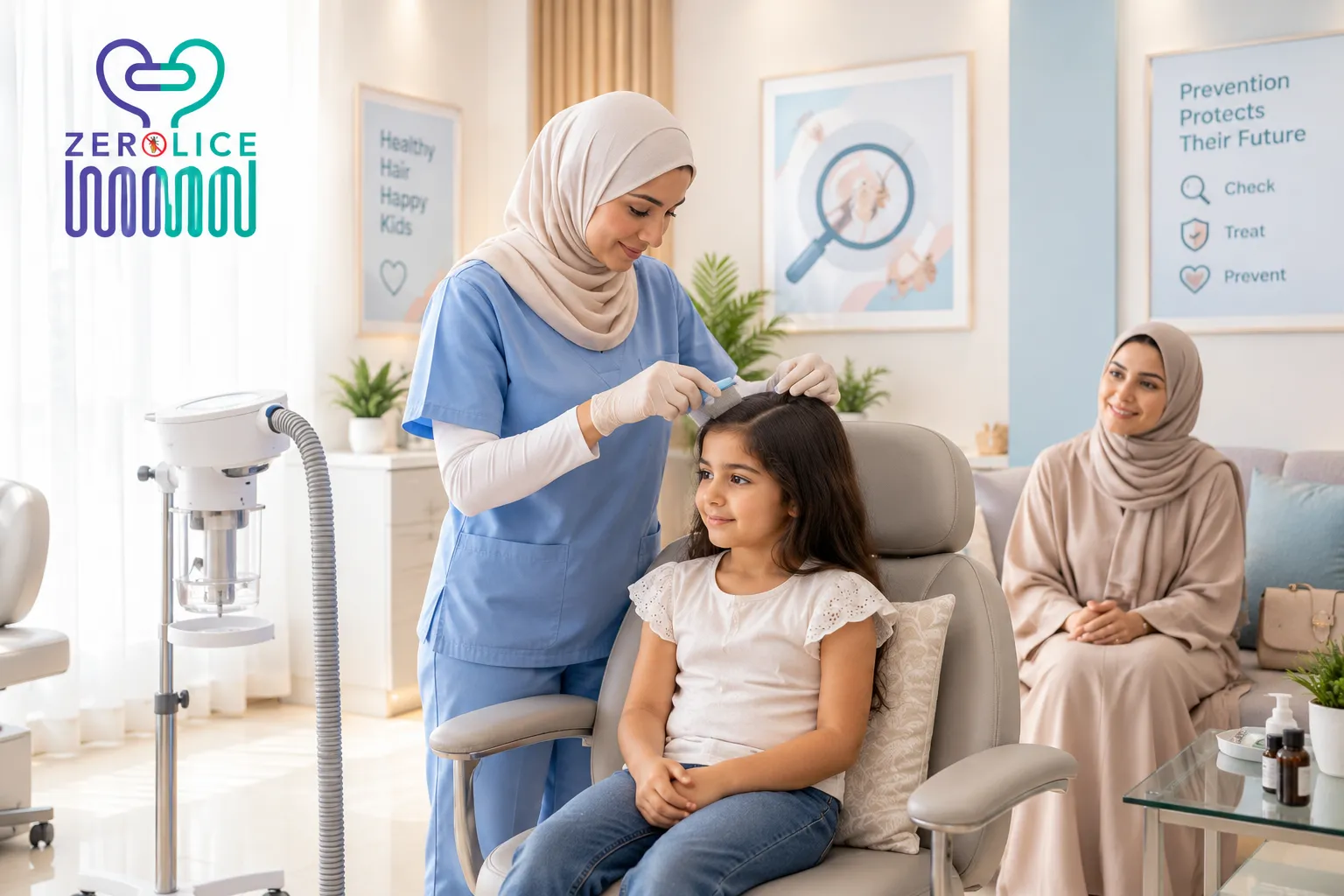
The hair is examined section by section to identify live lice, nits and possible look-alikes before the next step is recommended.
A professional examination generally involves:
- Examining the scalp and hair.
- Dividing the hair into manageable sections.
- Checking areas behind the ears and around the neck.
- Identifying live lice and distinguishing them from old egg casings.
- Explaining whether the findings indicate an active infestation.
- Recommending appropriate next steps and follow-up.
This is particularly helpful when parents have already tried several treatments but are unsure whether the problem is still active.
You can also review the Zero Lice inspection and verification process before booking.
What Should You Do About Siblings and Other Family Members?
Check close household contacts, but do not automatically treat everyone.
If one child has confirmed live lice, examine siblings, parents and other close contacts who have had direct hair-to-hair contact.
A person may have lice without obvious itching, especially early in an infestation.
However, checking the family does not mean everyone needs treatment. Treatment should be directed at people with confirmed active lice according to the appropriate treatment guidance.
If several family members are affected, arranging checks together can make follow-up easier and reduce the chance of overlooking another active case.
How Can You Reduce the Risk of Reinfestation?
Follow the treatment instructions, continue appropriate follow-up checks, and reduce direct hair-to-hair contact.
Useful steps include:
- Avoid head-to-head contact while the infestation is being managed.
- Do not share combs, brushes, towels, hats or hair accessories.
- Wash recently used bedding, clothing and towels according to appropriate care instructions.
- Clean combs and brushes used by the affected person.
- Check close household contacts.
- Follow the recommended treatment schedule.
- Continue checking the hair after treatment.
You do not need to deep-clean the entire house or use insecticide sprays.
For items that cannot be washed or dry-cleaned, CDC guidance recommends sealing them in a plastic bag for two weeks, rather than only a few days.
What About School Attendance After Lice Are Found?
School attendance rules vary, so parents should follow the school's written policy while also understanding current medical guidance.
CDC guidance states that children with head lice generally do not need to be sent home early and can return after beginning appropriate treatment. However, individual schools and nurseries may have their own procedures.
This is why parents should check the school's specific policy rather than assuming that every school follows the same rule.
How Often Should You Check Your Child's Hair?
There is no need to panic-check every day when there is no confirmed infestation, but checking after a reported exposure can be sensible.
If lice are confirmed, follow-up checks are more frequent. CDC guidance recommends checking the hair and removing lice or nits every 2–3 days for the next 2–3 weeks after treatment, depending on the treatment used.
For ordinary school life, parents can make hair checks part of their routine after school notices, close exposure, or periods when children have had increased close contact.
Frequently Asked Questions
What should I do if my child's school sends a lice notice?
Check your child's hair carefully rather than treating automatically. Look for live crawling lice and nits close to the scalp, then follow the school's policy if an infestation is confirmed.
Does my child need a lice check if there is no itching?
Yes. Itching does not always appear early, so the absence of itching does not rule out head lice.
Should I check my child's siblings?
Yes. If your child has confirmed live lice, check siblings and other close household contacts, particularly those who have had direct hair-to-hair contact.
Can my child go to school if I only find old nits?
School policies vary. Old or distant nits may be empty or nonviable, so they should not automatically be treated as an active infestation. Confirm the school's requirements before making a decision.
How do I know whether white particles are nits or dandruff?
Nits are firmly attached to individual hairs, while dandruff generally moves or falls away more easily. If you cannot tell the difference, a professional check can prevent unnecessary treatment.
When should I book a professional lice check?
Book a professional check if you cannot confirm what you are seeing, the hair is difficult to examine, lice keep returning, several family members may be affected, or you want confirmation before treatment.
Can adults get head lice from children?
Yes. Adults can develop head lice after close hair-to-hair contact with an infested person. This is why close household contacts should be checked when an active infestation is confirmed.
How long should I keep checking after treatment?
The schedule depends on the treatment used. CDC guidance recommends checking and removing lice or nits every 2–3 days for 2–3 weeks after treatment.
A school lice notice is a reason to check, not a reason to panic.
Start with a careful examination of your child's hair and scalp. Look for live crawling lice and firmly attached nits close to the scalp, and avoid unnecessary treatment when there is no confirmed infestation.
If you are unsure what you are seeing, the hair is difficult to examine, or the problem keeps returning, a professional school lice check can give you a clearer answer and help you choose the next step.
For families in the UAE, Zero Lice offers professional lice-check and removal services for children, adults and families.