All articles
How Can I Check My Own Hair for Lice?
Check your hair for lice now! Learn how to spot lice and nits at home, use a lice comb correctly, and know when to get a professional head lice check.
If your scalp feels unusually itchy or you have recently been in contact with someone who has head lice, you may be wondering: How can I check my own hair for lice?
Checking your own hair is more difficult than examining someone else because lice are small, move quickly, and usually hide close to the scalp. However, with bright lighting, two mirrors, a fine-toothed lice comb, and a careful section-by-section inspection, you may be able to identify live lice or nits at home.
This guide explains how to check yourself for lice, where to look, what lice and lice eggs look like, and when to book a professional head lice check.
How Do I Know If I Have Head Lice?
Itching is the most recognised sign of head lice, but it is not always present. Some people may have an active infestation for several days or weeks before noticing symptoms.
Common signs of head lice include:
- Persistent scalp itching.
- A crawling or tickling sensation in the hair.
- Small insects moving close to the scalp.
- White, yellow, or brown eggs attached to hair strands.
- Increased itching behind the ears or near the neckline.
- Red bumps or scratch marks on the scalp.
- Difficulty sleeping because lice may be more active in the dark.
- A confirmed lice case within your home, school, or workplace.
Itching alone does not confirm an infestation. Dry skin, dandruff, eczema, product buildup, and allergic reactions can cause similar symptoms. The most reliable evidence is finding a live louse.
If another family member has lice, read My Child Has Lice: What Should I Do First? before beginning treatment.
What Do Head Lice Look Like?
Adult head lice are small, wingless insects with six legs. Their colour can range from greyish-white to tan or brown, making them difficult to see against different hair colours.
Head lice:
- Are usually about the size of a sesame seed.
- Crawl quickly through the hair.
- Stay close to the scalp.
- Cannot fly or jump.
- May be easier to identify when caught in a lice comb.
Young lice, known as nymphs, are smaller and often more difficult to detect. This is why a quick visual inspection may miss an early infestation.
What Do Nits Look Like in Hair?
Nits are lice eggs attached firmly to individual hair strands. They are usually found close to the scalp, where the temperature is suitable for development.
Depending on their stage, nits may appear:
- White, yellow, tan, or brown.
- Oval-shaped.
- Extremely small.
- Firmly attached to one side of a hair strand.
- Concentrated behind the ears or near the back of the neck.
Nits do not move when you shake the hair. They are attached with a glue-like substance and can be difficult to slide along the hair using your fingers.
Nits vs Dandruff: How Can You Tell the Difference?
One of the most common problems during a self lice check is confusing nits with dandruff.
Dandruff and dry skin flakes generally:
- Have an irregular shape.
- Sit loosely on the scalp or hair.
- Move when touched.
- Fall away when the hair is brushed or shaken.
Nits generally:
- Have a small oval shape.
- Attach to a single hair strand.
- Remain fixed when touched.
- Require careful combing or manual removal.
Other substances, including hair spray residue, sand, fabric fibres, or dried styling products, may also look like lice eggs. If you cannot tell whether a particle is a nit, a professional lice inspection can provide a clearer answer.
What Do You Need to Check Your Own Hair for Lice?
Before starting, collect the following items:
- A bright lamp or strong natural light.
- A wall mirror and handheld mirror.
- A fine-toothed lice or nit comb.
- Regular hair clips.
- A standard comb for sectioning the hair.
- A white towel or white paper.
- Tissues for wiping the comb.
- Hair conditioner if you are using the wet-combing method.
- A phone camera with zoom for examining difficult areas.
The white towel or paper makes it easier to see anything removed by the comb, particularly when you have dark hair.
You can learn about the differences between professional and household combing tools in this guide to types of lice treatment devices.
How Can I Check My Own Hair for Lice Step by Step?
1. Choose a Well-Lit Area
Stand or sit in a room with bright lighting. Daylight near a window can help, but a focused lamp may make the scalp easier to inspect.
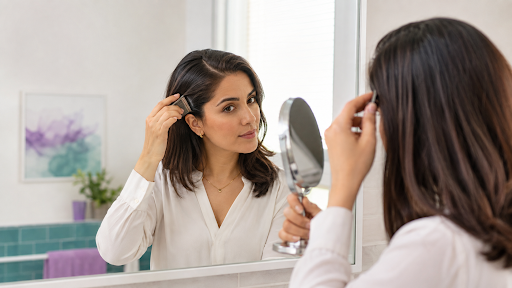
Place one mirror in front of you and use a handheld mirror to view the back of your head. You can also position your phone behind you and use its camera to enlarge difficult areas.
2. Begin With the Most Common Areas
Lice can appear anywhere on the scalp, but certain areas should be inspected first.
Check:
- Behind both ears.
- Around the neckline.
- The crown of the head.
- The hairline.
- Areas that feel particularly itchy.
Look closely at the first few centimetres of hair near the scalp.
3. Divide Your Hair Into Small Sections
Large sections make it easier to overlook lice or nits. Divide the hair into four main areas, then separate each area into smaller sections.
Use clips to keep the inspected hair away from the section you are currently checking. Work systematically from one side of the head to the other.
4. Look Closely at the Scalp and Hair Strands
Part each section and inspect the roots. Look for moving insects and small oval particles attached to individual hairs.
Because live lice avoid light and move quickly, you may see movement for only a moment. Do not rely on a visual inspection alone.
5. Use a Fine-Toothed Lice Comb
Place the lice comb as close to the scalp as comfortably possible. Pull it slowly through the entire length of the hair.
After every stroke:
- Wipe the comb on a white tissue.
- Inspect the teeth under bright light.
- Look for moving insects or attached particles.
- Clean the comb before checking the next section.
Repeat the process several times in each area.
6. Try Wet Combing for Lice
- Wet combing may make a self-check easier because conditioner slows the movement of lice and helps the comb pass through the hair.
- To check for lice with wet hair:
- Wash or thoroughly wet the hair.
- Apply enough conditioner to coat the hair.
- Remove tangles with a regular comb.
- Divide the hair into small sections.
- Comb from the scalp to the ends with a lice comb.
- Wipe and inspect the comb after each pass.
Continue until you have checked the entire scalp.
7. Recheck Anything Suspicious
If you find an insect, place it on a white tissue and inspect it under bright light. A phone camera with zoom may help you see its shape and legs.
Finding only white particles does not always confirm lice. The most reliable sign of an active infestation is a live, crawling louse.
Can You Feel Lice Crawling in Your Hair?
Some people report a tickling or crawling sensation, but this feeling is not proof of head lice. Scalp sensitivity, dry skin, anxiety, and loose hairs can create similar sensations.
You may also have lice without feeling any movement. Therefore, combing and visual inspection are more dependable than symptoms alone.
Can You Check for Lice Without a Lice Comb?
You can inspect your scalp using mirrors and bright lighting, but a visual check may miss small or fast-moving lice. A fine-toothed comb is more effective because it can physically remove insects that are difficult to see.
If you do not have a suitable comb or cannot inspect the back of your scalp properly, ask another person to help or book a professional lice screening.
What Should You Do If You Find Lice?
If you find a live louse:
- Stay calm and confirm the infestation.
- Avoid sharing combs, towels, pillows, and hair accessories.
- Check people who have had close head-to-head contact with you.
- Avoid applying several treatments at the same time.
- Follow the instructions for your selected removal method.
- Remove lice and nits section by section.
- Complete the recommended follow-up inspection.
- Clean recently used hairbrushes and accessories.
Treatment should focus on people with a confirmed infestation. Applying unnecessary treatments to everyone may cause avoidable scalp irritation.
For more guidance, visit the Zero Lice head lice treatment and prevention blog.
When Should You Book a Professional Lice Check?
Consider professional screening if:
- You cannot inspect the back of your head.
- Your hair is very thick, long, curly, or tightly textured.
- You are unsure whether you found lice, nits, or dandruff.
- Symptoms continue despite repeated checking.
- Lice return after home treatment.
- Several family members may be affected.
- You want a detailed section-by-section inspection.
- You need professional lice and nit removal.
Zero Lice UAE provides professional head lice checks and removal services for children, adults, and families. Services are available at the Ajman centre and through convenient at-home appointments across Dubai, Sharjah, Ajman, and other areas.
The Zero Lice removal process includes inspection, lice removal, fine combing, and final verification.
Book a Professional Head Lice Check
Checking your own hair can be helpful, but it is easy to miss lice or nits in areas you cannot see. If you want a reliable answer or professional help removing an infestation, book a screening with Zero Lice.
Review the available lice removal prices and follow-up optionslice removal prices and follow-up options, or contact Zero Lice to book an appointment
Frequently Asked Questions
How can I check my own hair for lice?
Use bright lighting, two mirrors, and a fine-toothed lice comb. Divide your hair into small sections and inspect the scalp, especially behind the ears and near the neckline. Wipe the comb on a white tissue after every pass.
How do you check for lice on yourself?
The most effective method is section-by-section wet combing. Conditioner slows lice movement, while a fine comb helps remove insects that may not be visible during a standard scalp inspection.
Can I have head lice without itching?
Yes. Some people do not experience immediate itching, particularly during an early infestation or their first exposure to lice.
Is it difficult to find lice in long or thick hair?
Yes. Long, thick, or curly hair can make self-inspection more difficult. Dividing the hair into very small sections or booking a professional lice check can improve accuracy.
What if I cannot find lice but my scalp still itches?
The itching may be caused by dry skin, dandruff, product irritation, eczema, or another scalp condition. If symptoms continue, arrange a professional lice check or consult a healthcare professional for unusual or severe scalp symptoms.