All articles
Home Remedies for Head Lice: What Works and What Should You Avoid?
This guide explains which home-based methods may help, which remedies should be avoided, and when it may be better to request professional head lice removal in the UAE.
Discovering head lice can be stressful, especially when the infestation affects a child. Many parents immediately search for home remedies for head lice, hoping to find a fast, natural, and affordable solution using products already available at home.
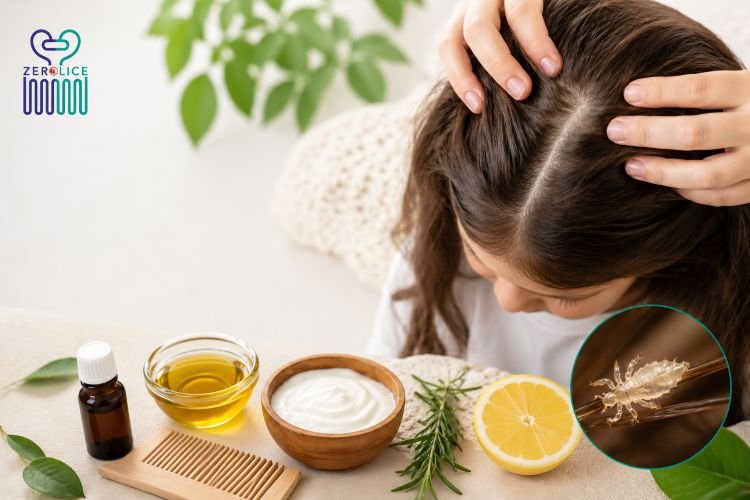
However, not every popular home remedy is effective. Some methods may help with manual lice removal, while others have little scientific evidence behind them. A few commonly suggested treatments can even irritate the scalp or expose children to unnecessary risks.
This guide explains which home-based methods may help, which remedies should be avoided, and when it may be better to request professional head lice removal in the UAE.
How Can You Confirm a Head Lice Infestation?
Before starting any home remedy, confirm that live lice are present.
Head lice are small insects that live close to the scalp. Their eggs, commonly called nits, are attached firmly to individual strands of hair. Unlike dandruff, nits do not fall away easily when the hair is brushed or shaken.
Common signs of head lice include:
- Persistent scalp itching
- A crawling sensation in the hair
- Small red marks around the neck or behind the ears
- Difficulty sleeping because lice are often more active in darkness
- Visible lice or eggs close to the scalp
Itching alone does not always confirm an infestation. Dry skin, dandruff, eczema, and product irritation can cause similar symptoms. Parents who are uncertain can review this practical guide for practical guide for parents dealing with head lice or arrange a professional inspection.
Wet Combing: The Most Reliable Home Method
Wet combing is one of the most widely recommended non-chemical approaches for removing head lice. It does not depend on oils, vinegar, or homemade mixtures. Instead, it physically removes lice and eggs using a fine-toothed lice comb.
To wet-comb the hair:
- Wash the hair with regular shampoo.
- Apply a generous amount of conditioner.
- Divide the hair into small, manageable sections.
- Start combing at the scalp and pull the comb slowly to the ends.
- Wipe the comb on a white tissue after every pass.
- Check the tissue for lice or eggs.
- Rinse the conditioner after completing the entire head.
- Wash and disinfect the comb carefully.
The NHS recommends repeating wet combing on days 1, 5, 9, and 13 to catch newly hatched lice before they can reproduce. A final check may be completed on day 17.
Wet combing can be effective, but it requires patience and careful sectioning. Missing a small area of hair may allow surviving lice or eggs to continue the infestation.
For families who find repeated combing difficult, Zero Lice follows a structured four-step head lice removal process that combines inspection, treatment, detailed nit removal, and follow-up support.
Does Conditioner Kill Head Lice?
Regular hair conditioner does not reliably kill lice or their eggs. Its main benefit is making the hair smoother, which helps a fine-toothed comb move through the strands more easily.
Conditioner may temporarily slow the movement of lice, making them easier to capture. However, it should be considered a combing aid rather than a complete treatment.
Because eggs remain attached to the hair, each section must still be combed carefully from the roots to the ends.
Do Olive Oil, Coconut Oil, or Mayonnaise Kill Lice?
Olive oil, coconut oil, petroleum jelly, butter, and mayonnaise are frequently promoted as remedies that supposedly suffocate lice.
The idea is that thick products coat the lice and prevent them from breathing. However, these substances have not been consistently proven to eliminate an entire infestation. Lice can survive for long periods under difficult conditions, and oils do not reliably destroy eggs.
One study reviewed several common remedies, including vinegar, olive oil, mayonnaise, melted butter, petroleum jelly, and isopropyl alcohol. None of these methods provided dependable control of head lice.
Oils may make combing easier by lubricating the hair, but most of the benefit likely comes from the physical combing rather than the oil itself.
These products can also be difficult to wash out, particularly from long, thick, curly, or textured hair. Parents should never cover a child’s head with a plastic bag or tightly sealed material because this creates a serious suffocation risk.
Can Vinegar Remove Head Lice Eggs?
Vinegar is another commonly recommended home remedy. Some people believe that its acidity can dissolve the substance that attaches nits to the hair.
Scientific evidence does not show that household vinegar reliably kills live lice or removes every egg. It may loosen some debris, but it should not replace thorough combing or an established lice treatment.
Applying concentrated vinegar may also cause discomfort, especially when the scalp has scratches, bites, eczema, or irritated skin.
Are Essential Oils Safe for Head Lice?
Tea tree, eucalyptus, lavender, neem, and anise oils are frequently included in natural lice-treatment recipes. Although some essential oils have demonstrated insecticidal activity in laboratory settings, there is not enough reliable evidence to confirm that homemade essential-oil treatments are safe and consistently effective.
Essential oils can cause:
- Scalp irritation
- Allergic reactions
- Eye irritation
- Breathing difficulties
- Chemical burns when applied undiluted
Children may be especially sensitive to concentrated oils. Essential oils should never be swallowed, applied near the eyes, or used without professional medical guidance.
Families considering natural options should understand the difference between “natural” and “risk-free.” Zero Lice explains more about common treatment errors in its guide on why DIY lice treatments fail.
How Should You Clean the Home After Finding Lice?
Head lice survive primarily on the human scalp, so there is usually no need to disinfect every room or throw away personal belongings.
Focus on items that touched the affected person’s head during the two days before treatment.
The CDC recommends:
- Washing recently used bedding, towels, hats, and clothing in hot water
- Drying washable items using high heat
- Sealing non-washable items in a plastic bag for two weeks
- Soaking combs and brushes in hot water for 5–10 minutes
- Vacuuming sofas, pillows, carpets, car seats, and areas where the person sat
The recommended laundry temperature is approximately 130°F or 54°C. This temperature applies to laundry and hair tools, not to bathing water.
Avoid using insecticide sprays, foggers, or fumigation products inside the home. They are unnecessary for head lice and may expose family members to harmful chemicals.
Check Other Family Members
When one family member has head lice, inspect everyone in the household.
Pay particular attention to:
- Behind the ears
- The neckline
- The crown
- Areas close to the scalp
Only people with confirmed live lice generally require treatment. At the same time, family members should avoid sharing brushes, hats, hair accessories, pillows, headphones, and towels until the infestation has been resolved.
Reducing direct head-to-head contact is especially important because this is the most common way lice spread.
Dangerous Home Remedies to Avoid
Never apply flammable, poisonous, or household cleaning substances to the hair or scalp.
Avoid using:
- Kerosene
- Gasoline
- Bleach
- Household pesticides
- Disinfectants
- Paint thinner
- Insect sprays
- Pet flea or tick products
These substances can cause poisoning, burns, breathing problems, eye injuries, and fires. They are not appropriate head lice treatments under any circumstances.
When Should You Get Professional Help?
Home combing may be suitable for a mild infestation when parents can inspect and treat every section carefully. However, professional assistance may be more practical when:
- The infestation keeps returning
- Several family members are affected
- The hair is extremely long, thick, curly, or tangled
- Parents cannot distinguish nits from dandruff
- Previous treatments have failed
- The scalp is inflamed, infected, or badly scratched
- A same-day solution is needed
- Parents want to avoid repeated trial-and-error treatments
Zero Lice provides private, at-home lice care for families across Dubai, Sharjah, Ajman, and other areas of the UAE. Families can review the available head lice treatment prices before choosing the most appropriate service.
The most dependable home approach to head lice is careful wet combing performed repeatedly according to a clear schedule. Conditioner can support the combing process, but popular remedies such as mayonnaise, vinegar, olive oil, and essential oils should not be treated as guaranteed solutions.
Successful lice removal requires identifying live lice, removing eggs carefully, checking close contacts, cleaning recently used personal items, and completing follow-up inspections.
When an infestation is difficult to manage, professional treatment can reduce stress and lower the risk of missed lice or nits. To request an inspection or arrange an at-home appointment, contact the Zero Lice team.