
All articles
Do Oils Treat Head Lice? Full Truth About Their Effectiveness
Do Oils Treat Head Lice? Full Truth About Their Effectiveness
Many parents look for natural solutions to get rid of head lice as soon as an infestation is discovered. Natural oils are often at the top of the list of remedies shared online and across social media. But the key question remains: do oils actually treat head lice, or is their effectiveness limited?
In recent years, many home remedies have spread widely, relying on olive oil, coconut oil, tea tree oil, and other natural oils as methods to eliminate lice and nits. While some people report success based on personal experience, specialists point out that the effectiveness of oils varies from case to case, and they may only play a supporting role rather than being a complete treatment.
In this article, we will explore the role of oils in lice treatment, the most commonly used types, their real ability to eliminate lice and eggs, and common experiences such as using olive oil for lice treatment.
What Is Head Lice and Why Is It Hard to Eliminate?
Head lice are very small insects that live on the scalp and feed on human blood. The main challenge lies in their rapid reproduction. Female lice lay dozens of eggs, known as nits, which attach firmly to the hair near the scalp.
If only adult lice are removed without eliminating the eggs, the nits hatch within a few days, and the infestation returns. That is why successful treatment depends on removing both live lice and their eggs.
Do Oils Actually Treat Head Lice?
The short answer is: oils may help in managing head lice, but they are not a guaranteed or complete treatment in all cases.
The idea behind using oils is that they coat the lice with a layer that may affect their movement or ability to breathe, making them easier to remove using a lice comb. Oils can also soften the hair and reduce the adhesion of eggs to the strands.
However, most studies suggest that natural oils alone are not sufficient to eliminate all lice or eggs, especially in severe infestations.
For this reason, experts recommend using oils as a supportive method alongside thorough combing or approved medical treatments.
Most Common Oils Used for Lice Treatment
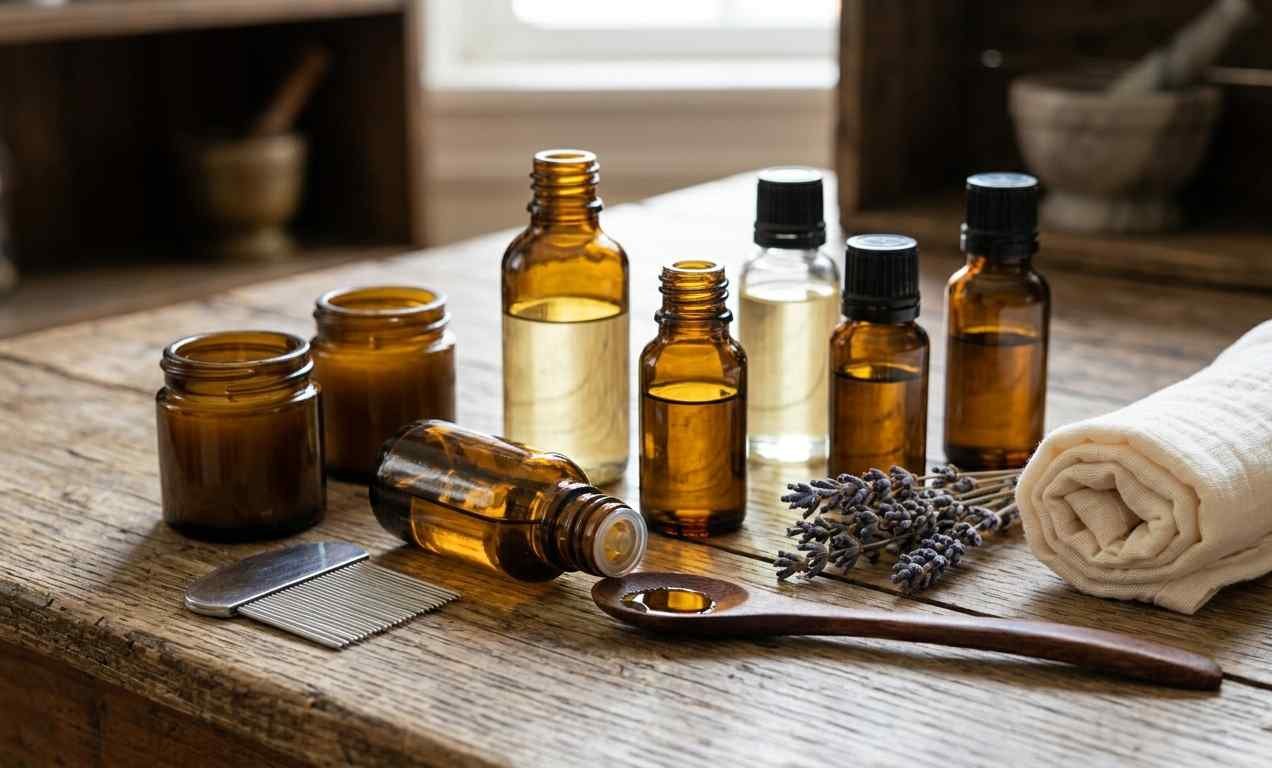
Several oils are commonly used in home remedies for head lice, including:
Olive Oil
One of the most widely used oils due to its availability and ease of use.
Coconut Oil
Known for its thick consistency, which helps coat both hair and scalp.
Tea Tree Oil
Contains natural compounds believed to help reduce insect activity.
Anise Oil
Sometimes used in lice treatment products due to its strong scent.
Neem Oil
Popular in traditional remedies for its natural insect-repelling properties.
Olive Oil for Lice Treatment: Is It Effective?
Olive oil for head lice is one of the most popular home remedies. It works by covering the hair completely with oil and leaving it for a period before combing and washing.
Supporters of this method believe that olive oil slows down lice movement or weakens them, making removal easier with a metal lice comb.
The typical process includes:
- Applying a generous amount of olive oil to the entire hair
- Covering the head for several hours
- Combing the hair with a lice comb
- Washing the hair thoroughly with shampoo
- Repeating the process if needed
Although widely used, its effectiveness varies from person to person, and there is no guarantee it will remove all eggs in a single attempt.
Personal Experience with Olive Oil for Lice
When looking at real-life experiences, many people share stories about using olive oil for head lice. Most of these experiences highlight an important point: success did not come from oil alone, but from combining it with consistent combing.
Many who successfully eliminated lice report that daily use of a metal comb was the key factor in removing both lice and nits, while olive oil helped make combing easier and loosened eggs from the hair.
Some experiences also show that repeating the treatment several times over one or two weeks was necessary for better results.
Does Olive Oil Kill Nits?
Nits are more resistant than adult lice, making them harder to eliminate.
Olive oil may help soften hair and slightly reduce the adhesion of some eggs, but it does not dissolve or kill nits.
That is why using a lice comb remains an essential step, regardless of the treatment method.
Benefits of Using Oils During Lice Treatment
Even if oils are not a complete cure, they offer several benefits:
Easier Combing
Oil helps the comb glide through hair more smoothly.
Reduced Hair Tangles
Especially helpful for children and long hair.
Assisting Egg Removal
Oils may make it easier to detach nits from the hair shaft.
Moisturizing the Scalp
Helps reduce dryness caused by some chemical treatments.
When Are Oils Not Enough?
Oils may not be effective in certain cases, such as:
- Severe infestations with large numbers of lice
- Long-standing untreated cases
- Spread of lice among multiple family members
- Heavy presence of nits attached to the hair
In such situations, medical lice treatments recommended by a doctor or pharmacist may be more effective.
How to Use Oils Properly
To get better results when using oils as part of treatment:
Cover the Entire Hair
Ensure the oil reaches all parts of the scalp and hair.
Use a Lice Comb
Comb the hair carefully after applying oil to remove lice and eggs.
Wash Hair Thoroughly
Remove oil residue and eliminated lice.
Repeat Inspection
Check the hair daily for up to two weeks.
Can Oils Alone Be Relied On?
Despite the popularity of natural remedies, relying only on oils is often not enough to completely eliminate lice.
- Successful treatment requires:
- Removing live lice
- Eliminating nits
- Cleaning bedding and clothing
- Checking all family members
- Monitoring for several days
For this reason, oils are best considered a supportive tool rather than a full replacement for proper treatment.
Tips to Prevent Lice From Returning
Even after successful treatment, prevention is essential:
- Avoid sharing combs and hairbrushes
- Wash pillowcases regularly
- Check hair periodically
- Avoid sharing hats and personal accessories
- Inspect family members if one case is detected
Conclusion
In answering the question do oils treat head lice, the reality is that natural oils may help in managing lice and making nit removal easier, but they are not a guaranteed cure in all cases. Olive oil remains one of the most commonly used home remedies, especially supported by many personal experiences. However, the best results are achieved when oils are combined with thorough combing, proper hygiene, and medical treatment when needed. Therefore, oils should be viewed as a helpful supporting method within a complete lice treatment plan.
Frequently Asked Questions Do Oils Treat Head Lice?
Does olive oil kill head lice?
It may slow down lice or make them easier to remove, but it does not guarantee complete elimination on its own.
Is olive oil effective for children?
It can be used as a supportive method, but medical advice is recommended for severe or recurring cases.
What is the best oil for lice removal?
Olive oil, coconut oil, and tea tree oil are commonly used, but effectiveness varies.
Can nits be removed using oils alone?
Usually not. Nits require thorough combing with a special lice comb.
How often should oil be used for lice treatment?
It depends on the severity of the infestation, but repeated applications with regular combing are often needed.