
All articles
Causes of Head Lice in Infants and How It Spreads to Young Children
Causes of Head Lice in Infants
Many parents believe that head lice only affect school-aged children. However, infants can also become infected with this irritating parasite. When a mother notices her baby frequently scratching the scalp or sees tiny insects or white dots attached to the hair, she may start wondering about the causes of head lice in infants and how a baby who has little contact with other children can become infected.
Although lice infestation can be worrying, it is not linked to poor hygiene or neglect. It usually occurs due to transmission from an infected person through different types of close contact. Understanding the causes and prevention methods helps protect the child and manage the problem early before it spreads.
In this article, we will explore in detail the causes of head lice in infants, how lice is transmitted to young children, early warning signs, and important prevention and treatment advice.
What is Head Lice?
Head lice are very small insects that live in the hair and feed on blood from the scalp. They are tiny and move quickly, which makes them difficult to detect at times.
A female louse lays eggs known as nits, which attach firmly to the hair shaft. These eggs hatch within days, producing new lice that can multiply and spread quickly.
Causes of Head Lice in Infants
When discussing the causes of head lice in infants, it is important to understand that a baby does not develop lice on its own. The infestation is always transmitted from an infected person.
The most common causes include:
Direct Contact with an Infected Person
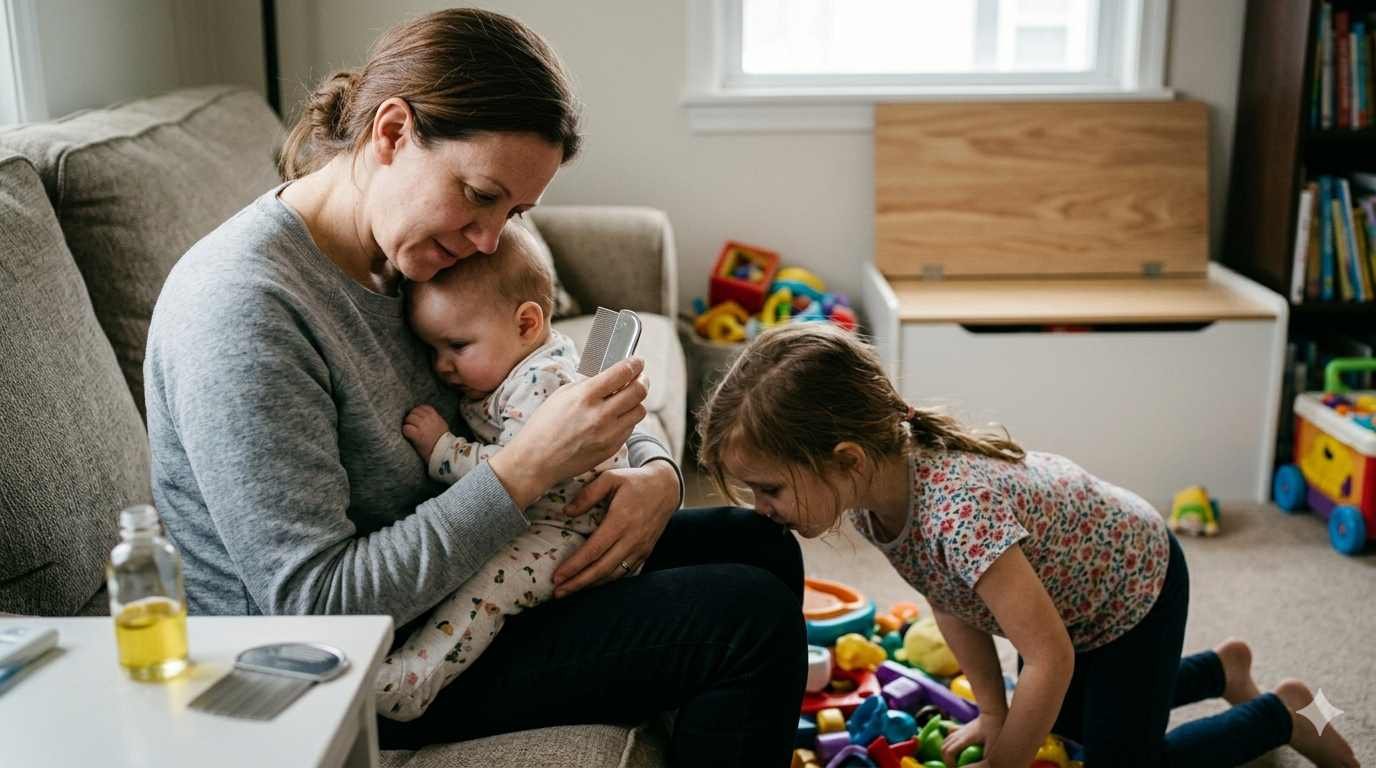
Direct contact is the main way lice spreads to infants. When a parent or sibling holds the baby and their head comes close to the infant’s head, lice can easily crawl from infected hair to the baby’s hair.
Since lice cannot fly or jump, transmission usually happens through close head to head contact.
Sharing Pillows and Bedding
Lice can also spread when an infant sleeps on a pillow or bedding recently used by an infected person.
Although lice cannot survive long away from the scalp, they may live for a short time, allowing transmission.
Using Shared Towels
Another possible cause is using towels that were previously used by someone with lice, especially if used shortly after infection.
Sharing Hair Care Tools
Using the same combs or hairbrushes among family members can also spread lice easily, even before symptoms appear in the infected person.
How Does Lice Spread to Infants?
To better understand the causes of head lice in infants, it is important to know how lice spreads.
Lice do not have wings and cannot fly. They also do not jump like fleas. Instead, they move by crawling.
Therefore, transmission mainly depends on:
- Hair to hair contact
- Sharing personal items
- Using contaminated bedding or pillows
- Close physical contact within the family
This is why infants can become infected even if they do not attend daycare or interact with other children.
How Do I Know If Lice Has Just Started?
Many parents ask how to detect lice in its early stages.
Early signs may not always be obvious, but common symptoms include:
Persistent Itching
Itching is one of the most common signs. Lice bites irritate the scalp and cause discomfort.
Small White Dots on Hair
You may notice small white dots attached to the hair near the scalp. These are usually lice eggs (nits).
Disturbed Sleep
The child may feel uncomfortable due to lice movement on the scalp, affecting sleep quality.
Visible Small Moving Insects
Careful inspection may reveal tiny gray or brown insects moving quickly through the hair.
Does Lice Mean Poor Hygiene?
One of the most common misconceptions is that lice is related to poor hygiene.
In reality, there is no connection between hygiene and lice infestation. Lice only seek the scalp for blood, whether the hair is clean or not.
Anyone can become infected regardless of personal cleanliness.
Causes of Head Lice in Pregnant Women
Some women also ask about causes of head lice during pregnancy.
The causes are the same as for others and include:
- Direct contact with an infected person
- Sharing combs or hairbrushes
- Using contaminated bedding or pillows
- Close contact with an infected child in the household
Pregnancy itself does not cause lice, but it may make the mother more aware of health issues.
Common Areas Where Lice Hides
When checking an infant’s hair, focus on areas where lice usually hides:
Behind the Ears
One of the most common locations for lice and nits.
Back of the Head
This area provides warmth, making it ideal for lice survival and reproduction.
Hairline at the Neck
Nits are often found close to the scalp in this region.
Complications of Ignoring Lice in Infants
Although lice is not usually dangerous, ignoring it may lead to:
Increased itching and irritation
Frequent scratching of the scalp
Skin infections from scratching
Spread of infestation to other family members
Early treatment is always recommended.
How to Prevent Head Lice in Infants
Prevention can significantly reduce the risk of infection:
Avoid Direct Head Contact
Do not allow unnecessary head to head contact between the infant and others.
Wash Bedding Regularly
Wash pillows, sheets, and towels in hot water to reduce transmission risk.
Use Separate Personal Items
The baby should have their own comb and hairbrush that are not shared with anyone.
Check Family Members
If one person is infected, all family members should be checked.
What to Do If You Discover Lice in Your Infant
If you notice lice or nits in your baby’s hair, act quickly and avoid random treatments.
Recommended steps include:
- Carefully confirm the infestation
- Contact a pediatrician
- Avoid unsuitable products for infants
- Follow medical instructions
- Clean bedding and personal items
Medical advice is essential, as some lice shampoos and chemical treatments may not be safe for infants.
Conclusion
The causes of head lice in infants are mainly due to transmission from an infected person through direct contact or sharing personal items such as pillows, towels, and combs. Lice is not related to poor hygiene and can affect any child exposed to infection. Early recognition of symptoms helps in controlling the spread. If lice or nits are detected in an infant, consulting a pediatrician is the safest approach for proper treatment.
Frequently Asked Questions About Head Lice in Infants
What are the most common causes of lice in infants?
Direct contact with an infected person and sharing personal items are the most common causes.
How can I detect lice in its early stage?
Early signs include itching, small white eggs on hair, or visible lice during scalp inspection.
Can newborn babies get lice?
It is less common but possible if exposed to an infected person in close contact.
Does lice mean poor hygiene?
No, lice spreads through direct contact and is not related to cleanliness.
What causes lice in pregnant women?
The same transmission methods apply, such as contact with infected individuals or shared items.
When should I see a doctor for an infant with lice?
You should consult a pediatrician immediately to ensure safe and appropriate treatment.